



Is Chest Pain Always a Sign of a Heart Attack? Causes, Symptoms and When to Seek Medical Help
September 08, 2026
Chest Pain Can Be Frightening, But It Has Many Possible Causes
Few symptoms cause as much immediate concern as chest pain. The first thought for many people is, “Am I having a heart attack?” While a heart attack is one important cause, chest pain can develop for several other reasons, ranging from acid reflux and muscle strain to lung conditions and inflammation around the heart. What matters is recognising when chest discomfort may require urgent medical attention and getting the cause properly assessed.
What Can Chest Pain Feel Like?
Chest pain does not feel the same for everyone. It may present as:
- Pressure or heaviness
- Tightness or squeezing
- Burning
- A sharp or stabbing sensation
- Crushing discomfort
- Pain that worsens while breathing
- Discomfort after eating
- Pain that appears during physical activity
Angina, for example, may feel like tightness, pressure or a dull ache and can spread to the neck, shoulders, jaw or arms.
The nature of the pain can provide useful clues, but symptoms alone cannot reliably confirm the cause.
Is Chest Pain Always a Sign of a Heart Attack?
No.A heart attack is one possible cause, but chest pain may also result from angina, digestive problems, chest-wall inflammation, muscle strain, anxiety or certain lung conditions.
However, heart attack symptoms can sometimes resemble indigestion or less serious chest discomfort. Typical symptoms may include crushing or squeezing chest pain, breathlessness, sweating, nausea and pain spreading towards the arm, neck or jaw.
That is why new or unexplained chest pain deserves careful assessment.
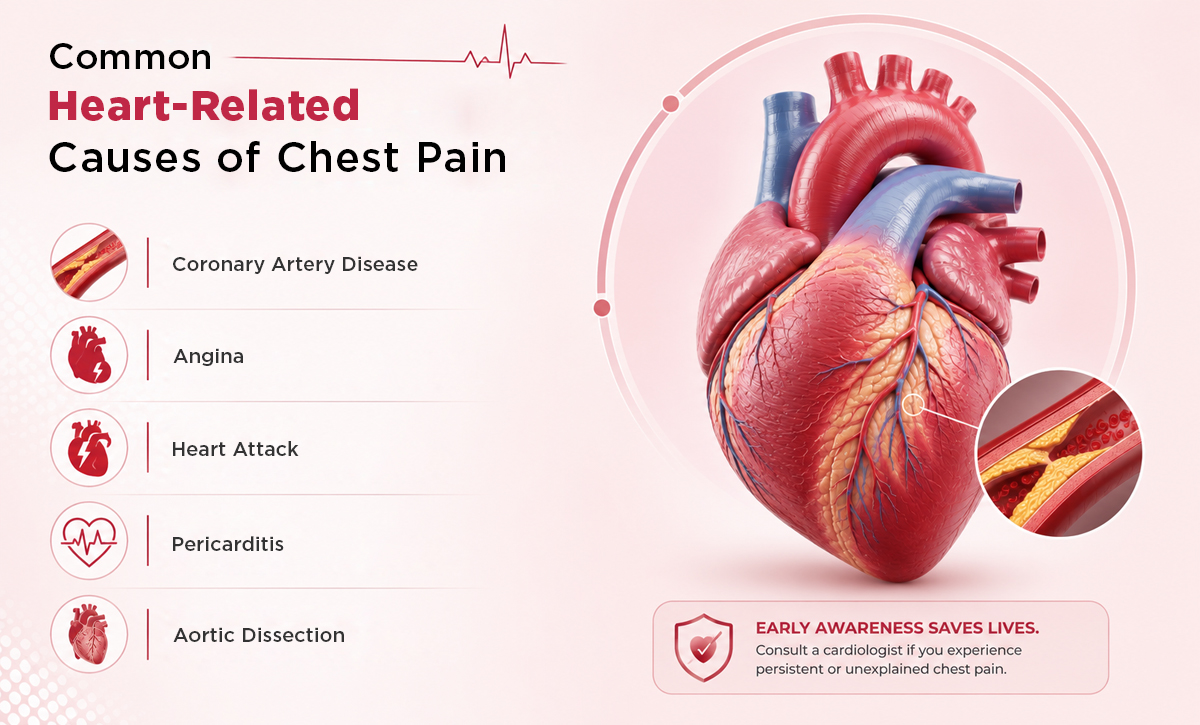
Common Heart-Related Causes of Chest Pain
Heart Attack
A heart attack occurs when the blood supply to part of the heart muscle becomes blocked.
The pain may feel like pressure, heaviness, squeezing or tightness and may spread to the arm, jaw, neck or back. Breathlessness, sweating, nausea or dizziness can occur alongside it.
A suspected heart attack is a medical emergency.
Angina
Angina occurs when the heart muscle does not receive enough oxygen-rich blood.
The discomfort is often triggered by exertion or stress and may improve with rest. It can feel like pressure, squeezing, heaviness or tightness rather than a sharp pain. For clinical guidance, see the ICMR Standard Treatment Workflow for Stable Angina.
Coronary Artery Disease
Coronary artery disease develops when the arteries supplying the heart become narrowed. Chest pain and breathlessness are among its common symptoms. Other structural heart conditions, such as aortic valve narrowing (aortic stenosis), can also cause chest discomfort or breathlessness and may require specialised evaluation.
Pericarditis
Pericarditis is inflammation of the tissue surrounding the heart. It can cause sharp chest pain that becomes worse when breathing deeply, coughing or lying down.
Aortic Dissection
Although uncommon, aortic dissection is a serious condition involving a tear in the wall of the body's main artery. Sudden, severe chest or upper-back pain requires immediate emergency assessment.
Chest Pain Can Also Come from Outside the Heart
Acid Reflux
Acid reflux can produce burning discomfort behind the breastbone, particularly after eating or while lying down.
Because digestive discomfort can sometimes resemble cardiac pain, recurrent or unexplained symptoms should not simply be assumed to be acidity.
Muscle Strain
Chest muscles can become painful after exercise, lifting or unusual physical activity. The discomfort may increase with movements or when the area is touched.
Costochondritis
Inflammation where the ribs join the breastbone can produce sharp chest pain and tenderness.
Anxiety and Panic Attacks
Anxiety may cause chest tightness, rapid breathing, palpitations and dizziness. However, chest pain should not automatically be attributed to stress until important physical causes have been considered.
Pneumonia and Other Lung Infections
Respiratory infections may cause chest pain, particularly during deep breathing or coughing, alongside fever and respiratory symptoms.
Pulmonary Embolism
A pulmonary embolism occurs when a blood clot blocks an artery in the lungs. Symptoms may include sudden breathlessness, chest pain that worsens while breathing in and coughing up blood. It requires urgent medical treatment.
Heart-Related or Non-Heart-Related Chest Pain?
| Feature | Heart-Related Pain | Non-Heart-Related Pain |
|---|---|---|
| Sensation | Feel heavy, tight, squeezing or pressing | Feel sharp, burning or localised |
| Location | Occur centrally and spread to the arm, jaw, neck or back | Remain in one area |
| Trigger | Develop with exertion or stress | Follow meals, movement or breathing |
| Other symptoms | Include breathlessness, sweating, nausea or dizziness | Depend on the underlying cause |
| Action | May require urgent cardiac assessment | Still requires assessment if persistent or unexplained |
These are general patterns rather than diagnostic rules. Some dangerous conditions can present atypically.
Warning Signs That Need Immediate Medical Attention
Seek emergency medical care if chest pain:
- Is severe or sudden
- Lasts for several minutes or keeps returning
- Feels like heavy pressure, squeezing or crushing
- Spreads to the arm, shoulder, neck, jaw or back
- Occurs with breathlessness
- Is accompanied by excessive sweating
- Occurs with nausea or vomiting
- Causes dizziness or fainting
- Is associated with sudden weakness or collapse
Heart attacks do not always present in the same way, so it is safer to seek urgent help when symptoms are concerning.
Who Has a Higher Risk of Heart-Related Chest Pain?
Risk may be higher among people with:
- High blood pressure
- Diabetes
- High cholesterol
- A history of smoking
- Excess weight
- A family history of heart disease
- Low levels of physical activity
- Existing cardiovascular disease
- Increasing age
Having risk factors does not mean chest pain is heart-related, but it makes timely evaluation particularly important.
How is the Cause of Chest Pain Diagnosed?
A cardiologist does not diagnose chest pain from symptoms alone. Assessment may include:
Medical History and Examination
The doctor will ask when the pain began, what triggers it, how long it lasts and whether other symptoms occur with it.
Electrocardiogram
An ECG test records the heart's electrical activity and can provide important information when a cardiac cause is suspected.
Blood Tests
Certain blood tests may help identify evidence of heart muscle injury.
Echocardiography
An echocardiogram uses ultrasound to assess the structure and function of the heart.
Stress Testing
A treadmill stress test may be considered in selected patients to assess how the heart responds to exercise.
Coronary Angiography
When significant narrowing or blockage of the coronary arteries is suspected, coronary angiography may be advised.
Coronary Angiography
When significant narrowing or blockage of the coronary arteries is suspected, coronary angiography may be advised.
The diagnostic pathway in the supplied brief appropriately emphasises history, physical examination, ECG, blood tests, echocardiography and further cardiac investigations where clinically required.
Treatment Depends on the Cause
There is no single chest pain treatment because the symptom itself is not the diagnosis.
Heart-related chest pain may require medicines, procedures or emergency treatment depending on the underlying condition.
Angina treatment may involve medicines alongside management of cardiovascular risk factors.
Acid reflux may require dietary changes and appropriate medication.
Muscular chest pain may improve with rest and treatment directed towards the affected muscles or joints.
Anxiety-related symptoms may benefit from management of the underlying anxiety, but only after appropriate medical assessment where necessary.
The important point is simple: treat the cause, not merely the symptom.
Can Chest Pain Be Prevented?
Not every cause can be prevented, but cardiovascular risk can often be reduced. Helpful measures include:
- Eating a balanced, heart-conscious diet
- Staying physically active
- Maintaining a healthy weight
- Keeping blood pressure controlled
- Managing diabetes carefully
- Monitoring cholesterol
- Avoiding tobacco
- Attending appropriate cardiac check-ups
People with existing heart disease should follow their prescribed treatment and review plan.
Common Myths About Chest Pain
Myth: Every episode of chest pain means a heart attack.
Fact: Many conditions can cause chest pain, but potentially serious causes must still be excluded.
Myth: Heart attacks only happen to older people.
Fact: Younger adults can also develop heart disease, particularly when significant risk factors are present.
Myth: If it feels like acidity, it cannot be the heart.
Fact: Heart-related discomfort can sometimes feel like indigestion.
Myth: If the pain disappears, everything is fine.
Fact: Intermittent pain can still occur with heart conditions such as angina.
Cardiac Care at Woodlands Hospital
Woodlands Hospital provides dedicated cardiology services in Kolkata and lists a team of cardiologists through its cardiac department.
For someone experiencing recurrent chest discomfort, symptoms during physical activity or unexplained cardiac symptoms, consulting a cardiologist in Kolkata can help establish whether further evaluation is required.
When Should You Consult a Cardiologist?
Consider a cardiology consultation if you experience:
- Repeated episodes of chest discomfort
- Pain or tightness during exercise
- Unexplained breathlessness
- Palpitations accompanied by discomfort
- Persistent or unexplained chest symptoms
- An existing cardiovascular condition
- A strong family history of heart disease
- Several cardiovascular risk factors
For sudden or severe chest pain, however, do not wait for a routine appointment. Seek emergency medical care.
Book a Consultation Today
Take the first step towards expert surgical care.
Conclusion
Chest pain is not always a heart attack, but that does not make it a symptom to dismiss.
It may arise from the heart, digestive system, muscles, lungs or other causes. The safest approach to persistent, recurrent or unexplained chest discomfort is professional medical evaluation rather than self-diagnosis.
And when chest pain is sudden, severe or accompanied by breathlessness, sweating, nausea, fainting or pain spreading to the arm, jaw, neck or back, emergency care should be sought immediately.
For cardiac consultation at Woodlands Hospital, call 9951 333 333.