



Robotic Gynaecological Surgery: Hysterectomy, Myomectomy & Recovery
September 10, 2026
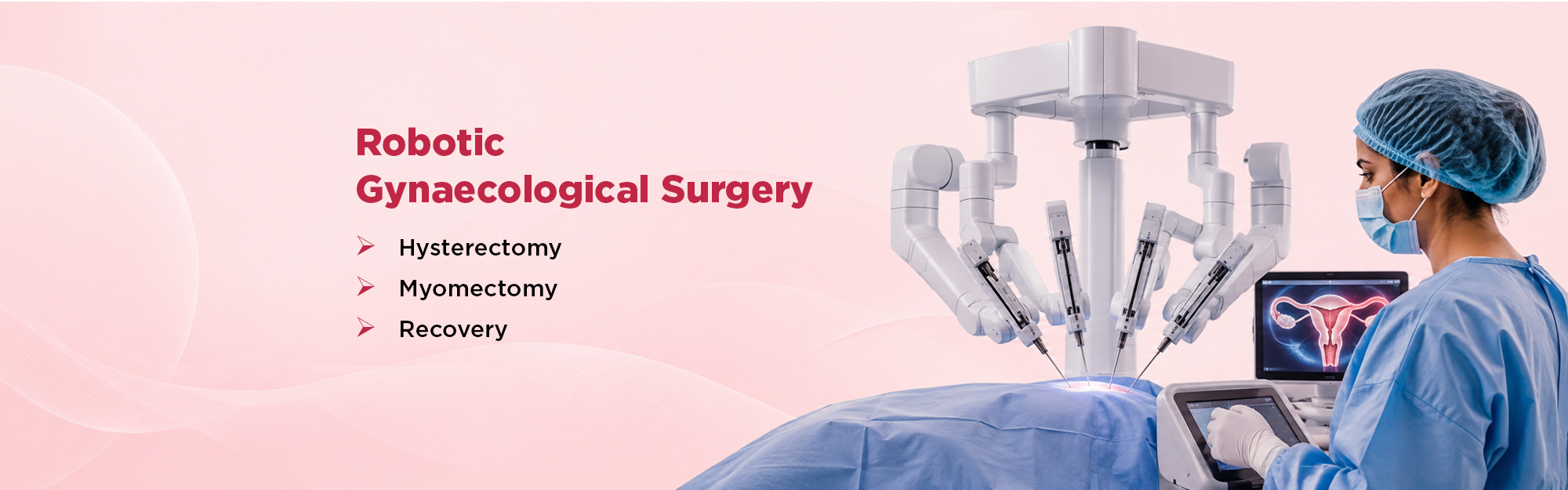
Robotic gynaecological surgery uses advanced robotic technology to allow surgeons perform procedures such as myomectomy and hysterectomy with greater precision, better visualisation, and smaller incisions. Unlike conventional gynaecological open surgeries, it helps reduce blood loss, minimise pain, makes hospital stays shorter, and support faster recovery, depending on the patient’s condition and overall health. The spectrum of gynaecological surgery has changed drastically with the growing adoption of minimally invasive techniques. Instead of relying solely on traditional and open procedures, surgeons can now use the latest technology to perform selected and complex procedures through smaller incisions. Robotic gynaecological surgery is one of those advancements. It combines the expertise of a trained surgeon with sophisticated robotic technology to provide better visualisation, precise movement of instruments, and improved access to the challenging areas of the pelvis. Minimally invasive surgery such as:
- Robotic myomectomy is chosen for appropriately selected patients.
- The Da Vinci Surgical System is one of the best-known robotic platforms that translate the surgeon’s hand movements into precise movements of specialised instruments within the body.
What is Robotic Gynaecological Surgery?
A robotic-assisted gynaecology surgery is one in which a surgeon uses a specialised robotic platform to perform a minimally-invasive procedure. Most importantly, the robot does not perform the surgery independently. The surgeon takes control of the entire procedure and the robotic system acts like an advanced surgical interface allowing the surgeon to control tiny instruments with precise movements. Here is what happens during the surgery:
- Small incisions are made to insert the camera and specialised instruments
- The surgeon operates from a console while viewing the surgical area through a high-definition and magnified three-dimensional image
- Compared to conventional and rigid instruments of laparoscopy, the flexibility and preciseness of robotic instruments are higher
The Da Vinci system is an example of robotic surgery. Robotic-assisted surgery is not only minimally invasive but combines established laparoscopic principles with advanced instrument control as well as visualisation.
How Does Robotic Gynaecological Surgery Improve Surgical Precision?
One of the major benefits of robotic gynaecological surgery is the level of control it provides during selected surgical procedures. Here is how it helps improve surgical precision:
Wristed Instruments
Unlike traditional laparoscopic instruments, robotic instruments can replicate the movement of a human wrist. This allows the surgeon greater flexibility during dissection, suture, and manipulation of tissues.
3-D Magnified Vision
The surgeon can view the operating field through a magnified 3D high-definition image. Enhanced visualisation makes it easier to identify anatomical structures and work in confined pelvic spaces.
Tremor Filtration
Robotic systems can filter out natural hand tremors and help translate the intended movements of the surgeon into controlled movements of the robotic instrument.
Flexibility
The combination of flexible instruments and precise control is particularly valuable during procedures that involve delicate tissue handling or suturing.
Complex Pelvic Anatomy
The pelvic contains multiple closely-positioned organs, serves, blood vessels, and other structures. Enhanced visualisation and instrument control help surgeons navigate the complex anatomy during appropriately chosen procedures.
These features lead to enhanced surgical precision. However, the technology is an aid to surgical expertise and never replaces it. The experience of the surgeon as well as the surgical team remains crucial to achieving a safe outcome.
Robotic Hysterectomy: Benefits and Recovery
A hysterectomy is a surgical procedure for the removal of uterus. Depending on the patient’s condition, the cervix, fallopian tubes, and ovaries may also need to be removed. It is recommended for conditions such as symptomatic fibroids, abnormal uterine bleeding, adenomyosis, uterine prolapse or certain gynaecological cancers. When possible, a robotic hysterectomy can be performed as a minimally invasive surgery with smaller cuts rather than large incision that is associated with traditional open surgery.
Potential Benefits of Robotic Hysterectomy- Smaller surgical incisions
- Reduced blood loss in appropriately selected cases
- Less postoperative pain
- Lower tissue trauma
- Shorter hospital stay
- Faster return to routine activities
- Smaller and less noticeable scars
Recovery varies from patient to patient. A person undergoing minimally invasive hysterectomy may resume daily activities sooner than an open surgery but complete recovery may take several weeks.
Robotic Myomectomy: Benefits and Recovery
Robotic myomectomy is a minimally invasive surgery performed to remove uterine fibroids or non-cancerous growths that develop in and around the uterus. These growths may cause heavy menstrual bleeding, pelvic pressure pain, frequent urination, and also fertility problems. During this procedure, the surgeon uses robotic instruments to carefully separate and remove fibroids while aiming to preserve as much healthy uterine tissues as possible.
Potential Benefits of Robotic Myomectomy- Smaller incisions
- Reduced blood loss
- Less postoperative discomfort
- Precise tissue handling
- Shorter hospital stay
- Faster post surgical recovery compared with many open procedures
Recovery from uterine fibroid surgery depends on the number, size, and location of fibroids, the complexity of the procedure, and the patient’s overall health.
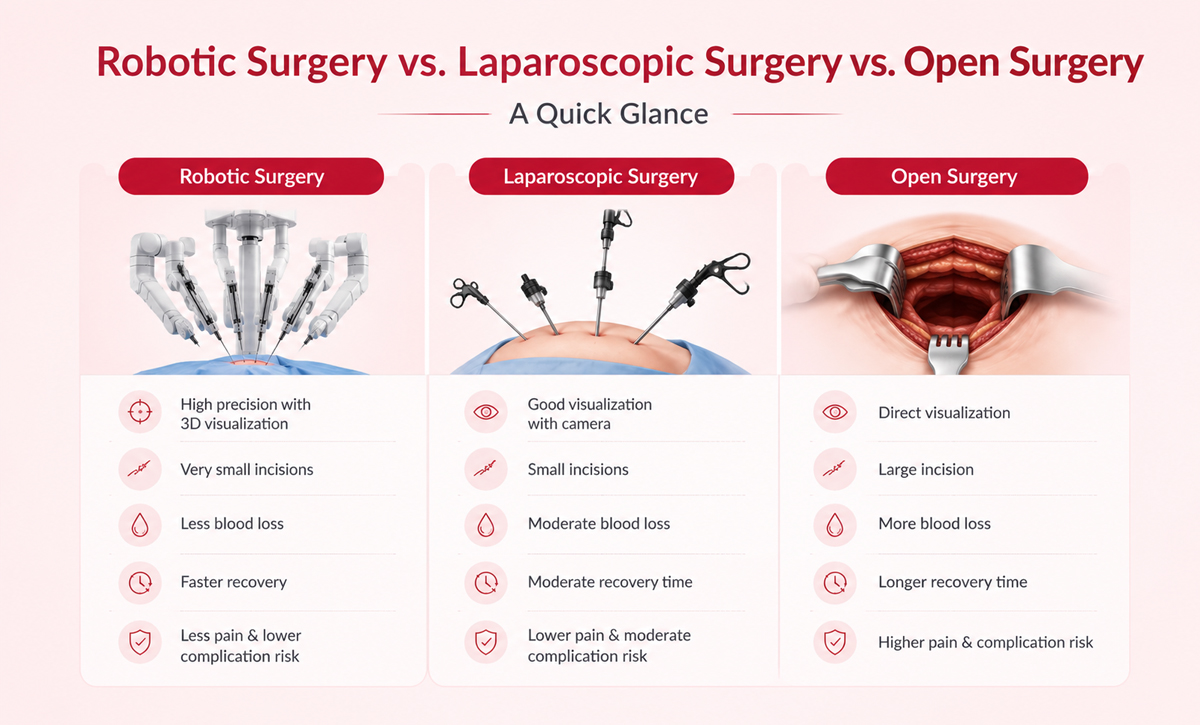
Robotic Surgery vs. Laparoscopic Surgery vs. Open Surgery: A Quick Glance
The three approaches and procedures differ in the way surgeons access and operate on the affected area. Robotic and laparoscopic procedures are minimally invasive while open surgery requires a larger incision.
| Feature | Robotic Surgery | Laparoscopic Surgery | Open Surgery |
|---|---|---|---|
| Incision Size | Small | Small | Larger |
| Precision | Very high | High | High based on procedure |
| Blood loss | May be lower in selected procedures | May be low | Generally higher |
| Post-operative Pain | Often less than open surgery | Often less than open surgery | Generally more |
| Recovery | Faster | Faster | Longer |
| Hospital Stay | Shorter | Shorter | Longer |
| Visualisation | Magnified 3D vision on compatible systems | Magnified camera view | Direct surgical field |
| Instrument Movement | Advanced wristed movement | Restricted instrument movement | Direct hand movement |
No single approach is automatically best for every patient. The choice depends on the disease, anatomy, previous operations, surgical complexity and the surgeon's expertise.
Is Robot-Assisted Gynaecological Surgery Safe?
Robotic surgery is an established form of minimally invasive surgery, and robotic surgical systems such as the Da Vinci platform have undergone regulatory review for specified surgical uses.
However, the safety of a robotic procedure depends on much more than the technology itself. An experienced surgeon performing Da Vinci robotic surgery in Kolkata must understand both the robotic platform and the underlying surgical procedure. Appropriate patient selection, preoperative assessment, anaesthesia, operating-room protocols and postoperative monitoring all contribute to surgical safety.
A Patient’s Experience with Robotic Gynaecological Surgery
“Choosing the right hospital becomes even more reassuring when you hear from someone who has experienced the treatment firsthand. Shubhra, who underwent Robotic Myomectomy at Woodlands Hospital under the skilled guidance of Dr. Poushali Sanyal, shares how the advanced and minimally invasive procedure offered greater surgical precision, minimal discomfort and a smoother recovery, while helping preserve her uterus and supporting her journey towards a healthier future.”
Book a Consultation Today
Take the first step towards expert surgical care.
Conclusion
Robotic gynaecological surgery offers a precise, minimally invasive approach to procedures such as hysterectomy and myomectomy, helping eligible patients recover with less discomfort and smaller incisions.
Are you searching for robotic surgery hospital near me in Kolkata? Explore advanced robotic and minimally invasive gynaecological care with experienced specialists at Woodlands Hospital.
Visit www.woodlandshospital.in to book a consultation today.